Beats the alternative

Today I turn 56. I am so grateful for my life. My stock phrase whenever someone I know grouses about turning another year older is: “it beats the alternative.”

I received news that my godmother died Thursday in London at age 80, after a long cancer battle. Her husband, my godfather Michael, died nearly 20 years ago when he was just 62, of a brain tumor. I was able to visit my godfather a few days before he died. The whole family was at their home in Wellesley at the time, a grand Victorian-era brick estate overlooking the lake, with a sweeping view of Wellesley College on the far shore. Michael was in bed and I went up and sat with him for a little while. He was a man of towering intellect with a commanding presence and a keen sense of mischief. You had to stay tuned for high frequencies around Michael. If he’d been anyone other than my godfather, I would have found him terrifying. He earned a Ph.D. in anthropology from Oxford University that he somehow parlayed into a career in international investment banking, playing a seminal role in the invention of Eurobonds and Euro currencies. He was also a leader in the development of London’s Canary Wharf, and he co-created the first restaurant in the UK to receive a three star Michelin rating. At the time of his death, he was President of Templeton College at Oxford University.  This is just the tip of the iceberg in terms of his voracious appetite for intellectual challenge.

When I was 18, the summer before I began college, I went to work for him in London at the investment bank where he was a director. The bank was engaged in top secret merger negotiations that summer, and there were many hushed conversations in shadowy corners of the office. I lived with Michael and Lisa in their Kensington home, bunking down in one of their daughters’ rooms, eschewing a ride to work with Michael in his town car for the underground from Notting Hill Gate to Bank Street. I felt very young-professional.

My “job” at the bank consisted mostly of sitting in on meetings and writing summary notes that Michael would discuss with me at the end of day, to gauge how well  I understood the technicalities of investment banking, which was “not very”. I was also assigned the task of reading through major European and US financial newspapers and clipping the “tombstones”–-ads announcing bond issues underwritten by investment banks, in which the names of the underwriters appear in order of their financial participation, with the largest investors most prominently displayed in large type at the top, the small players crowded at the bottom, much like the billing on a movie poster. I had a desk of my own out on the trading floor, where I could absorb all the lingo of the traders on their phones, making deals, shouting out to each other in intriguing English or Swiss-German accents. Michael had a corner office, and when he was ready to scoop me up for a meeting, he would appear at his door and holler across the floor, “Holly Berry! Your presence is required.”   In our feminist age, this may strike you as horribly demeaning. But it made me feel like a rock star. “Off you go, then, Miss Berry,” the trader next to me would whisper impishly.

Years later, when I was living in Chicago and working in advertising, Michael was in town closing a deal, and I met him for breakfast at the Drake Hotel.   He probed me on my decision to take an advertising job, rather than to pursue work in academia or the arts. He wasn’t fooled by my assertion that the ad biz was a great fit for me because it combined creativity and business. He said, “well, it’s as good a place as any to start. Just don’t let the poet or the performer in you die. That would be a shame.”  I think this may have been the first time in my life that someone in a position of conventional authority suggested the arts might be a legitimate career path. I’ll never forget that gift. After breakfast, he gave me a ride to work in his limo. When the car pulled up to the curb, I saw that the president of our ad agency, whom I had never met, was chatting with a couple of high level mucky-mucks right by the main entrance to the building. Oy, how was this going to look, a young assistant account executive climbing out of a limo at eight in the morning? “Just hold your head high,” Michael suggested.  “Walk on past like this is how you get to work every day. That’ll keep them on their toes. “

Aunt Lisa was the perfect foil for him. An unpretentious auburn-haired beauty, she was impeccably educated, an erudite Bostonian who was no less strong-willed than he, just not as showy about it. Michael called her by her middle name, Bronson. She had that wonderfully flinty Yankee resolve that I’ve come to recognize from my twenty years living outside Boston, where established “Brahmin” families avoid ostentation like a Pamploma runner flees bulls.  Her opinions were strongly held.   Lisa immersed herself in the close-knit London community of bookbinders, a very different breed of people from the international jetsetters who abounded in Michael’s line of work. She loved the artisans’ crowded studios, their dusty shelves, the smell of leather and glue.  She told me once that she lived two lives;  the humble, bespectacled craftspeople of her bookbinding circle would be astonished by the glitter of the I-banking set. The summer I lived in London, she took me to an exhibition of art-bound books, bindings sculpted in leather, hand-tooled, many of them with beautiful gold leaf lettering. I remember one art book of M.C. Escher designs, bound by a flock of birds in contrasting leathers, creating an optical illusion reminiscent of the prints inside. A Grimm’s fairy tale volume depicted the witch’s candy house from “Hansel and Gretel” in a 3D sculpture of hand-dyed leathers and colored embroidery. These “books” were works of art, covers exquisitely complementing content.   Lisa loved it all: book, cover, craft and the bookbinding culture.

At the end of that summer, when I was packing for my flight back to the states, she came up to my room and handed me a small package. I unwrapped it to find a slim antique eternal calendar she had rebound for me in mossy, marbled green paper. She constructed the hard sleeve casing herself. I still have it, marked with important dates – our wedding, the kids’ births and christenings, the birthdays of my fourteen nieces and nephews, my in-laws and friends. Flowers are pressed in its pages, ivy from my bridal bouquet, iris John gave me when we discovered I was pregnant with Mia, a freesia from a floral arrangement at Michael’s memorial service on November 19, 1997. Now I shall have to press a blossom for my dear godmother Louisa Bronson Hunnewell von Clemm. It’s been too many years since I last saw her – perhaps five or even six–but her memory is indelible.

pressing-flowers

Lisa would have been about 43 that London summer I stayed with her, thirteen years younger than I am today.  She was in her early sixties when Michael died. They were such a unique and forceful pair, it was hard for me to imagine at that time how she made sense as a solo act. And look: she lived another nineteen years in England, close to her daughters and grandchildren, helping to run the Michael and Louisa von Clemm foundation, supporting artisans, book conservationists, students, education and much more, serving on boards in Boston and London.  I am reminded how very much living we all can do, at any age, if we choose to.
Moving

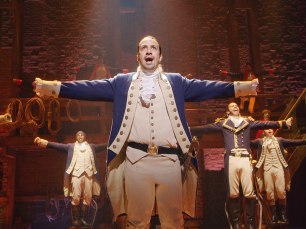
hamilton-01-800On the train to New York, woods, towns, water are all a blur. I am listening to the Hamilton soundtrack – we are going to see it tonight. It’s very difficult not to rock out to the music, even though I’m in the quiet car. Every so often, I start a little rhythmic shoulder-rolling or head-bobbing because I can’t help myself. I remember once when I was a teenager, my mom danced up the aisle at a movie theater. “Omigod, mom, please stop before I die,” I inwardly cringed. But John, seated with me as I pop and sway, seems nonplussed.

Listening to Lin-Manuel Miranda’s soundtrack (it’s not the first time; the girls are OBSESSED), I am awed, entertained, educated, thrilled. I think of Horace’s Ars Poetica, which I read as a college English major: the aim of poetry is to instruct and delight. By that standard, “Hamilton” is clearly poetry. You get it all: revolutionary war history, monetary policy, political philosophy, lessons on love and fatherhood, obsession and loss. All packaged in stick-with-you melodies, kickass raps, and sick beats that I dare you not to groove to, even though you’re on the Amtrak and there’s a tired-looking executive across the aisle giving you funny looks.

And did I mention that this amazing concoction of music, poetry, and history is also a moving piece of social commentary about insiders and outsiders, performed by a rainbow cast of predominantly brown actors who represent the America we have become, a country of immigrants, a kaleidoscope of races and creeds that within forty years (and perhaps sooner) is projected to see whites outnumbered by people of color? “Immigrants,” proclaims Lin-Manuel Miranda as Alexander Hamilton. “They get the job done.” It’s thrilling because it’s so true to our evolution.

Speaking of evolution, we live in a time of great scientific genius, with groundbreaking discoveries coming at a breakneck pace, whether in sequencing genomes or detecting gravitational waves. While I’m awed by the extravagance of our human intelligence in these advances, they do not move me as does “Hamilton,” a Billy Collins poem, a day at the museum, or even Lady Gaga singing “Til it Happens to You” at the Oscars. I feel cracked open by Art, as if I have a small flock of doves in my chest; their beating wings make me breathless, a pain rises in my throat and my eyes sting. I’m embarrassed when this happens to me, as if it’s a flaw in my character that I am so affected by the soaring vision of a creative imagination.

When we were visiting colleges with Mia this past year, it was all STEM, STEM, STEM. Every tour guide, every brochure and website seemed primarily devoted to sciences and tech. And why shouldn’t they be, since these fields offer the best job prospects for a generation of debt-laden graduates? Yet I am proud that Mia wants to embrace the “Arts” in “Liberal Arts,” as did Nate (an English major) and Lucy (a Drama major). These studies help us understand our humanity in ways that writing code or performing lab research do not. Through the arts, we plumb the depths of our hearts, our souls, our society.   Will engineering driverless cars deepen our sense of purpose and vitality?  They may move us around, they may even move us forward, but will they move us?


Super Tuesday

Election-Day1My friend Lisa arrived at the nine a.m. class this morning fresh from voting. “I did something I’ve never done before in my life,” she announced, one eyebrow cocked naughtily. “I voted in the Republican primary. My little stake in the ground for sanity,” she said.   She voted for John Kasich. More accurately, she voted against the Donald. In Massachusetts, “un-enrolled” independent voters like Lisa (and me) get to choose which party’s primary to vote in, on the spot. Some diehard Democrats even changed their party affiliation to un-enrolled just so they could cast a vote against Donald Trump.
Here in our nation’s birthplace, we are unapologetically progressive. But we are also sensible, pragmatic Yankees. We’ve elected any number of fine, moderate Republican governors: including our current governor, Charlie Baker, who has a statewide approval rating over 70% and is as practical and hard-working as his name suggests. So we’re not exclusively kneejerk liberal scum, is what I’m trying to say here. Yes, we gave you the Kennedys and Liz Warren (you’re welcome), but you may also thank us for Mitt Romney if you are  conservatively inclined. I’ll wager we are more capable of being fair and balanced than many states.

I was impressed that Lisa went for it and took the Republican ballot. Hamlet-like, I’ve been chewing on the question for a couple of weeks: Whether ‘tis nobler to suffer the cognitive dissonance of casting a vote for some Grumpy Old Patriarchy grouch, even if only as a protest vote against the Trumpeting tide; or to weigh in on the Democratic side, where I am reasonably confident my candidate of choice (I’m with her) will ultimately prevail.

In considering the possibility of being a Republican for a day, I’ve been paying closer attention to the GOP candidates’ visits here in Massachusetts.   I’m actually okay with this fellow John Kasich. I heard him interviewed yesterday by the local NPR station. He was thoughtful and unpretentious. The reporter asked if Mr. Kasich intends to go on the attack against Trump, playing the dependable labrador retriever to Rubio’s Jack Russell terrier-on-crack.   (In this analogy, Trump is a preening Afghan with flowing locks, and nose held high.)  Anyway, Governor Kasich responded to the question this way: “No. I am not interested in trading insults. At the end of the day, the ones I have to answer to, whether I win or lose, are the people who love and trust me, my friends and family. Will they say I conducted myself with integrity?”   I see why Lisa chose him for her protest vote.   If I have to be a Republican for a day, he’s my guy.

I love voting in the town where I live.  Lincoln, Massachusetts is wedged between her more famous neighbors, Lexington and Concord. Little known fact: Paul Revere was captured here. Half of Walden Pond (but not Thoreau’s cabin) is here, too. On the fourth of July, members of the local Minuteman militia don revolutionary garb and read the Declaration of Independence aloud, against a backdrop of stone walls and fields rolling away for acres. They fire their muskets in a volley of respect at the end of the reading. One year, the shots took an elderly lady by surprise, and she fainted and tipped off the stone wall she was sitting on, right into a lawn chair on the ground below.

We are a small town with a population of roughly six thousand. Since I’ve lived here for over twenty years, I know most of the people my age and older, and feel disconcerted not to recognize the young parents I see in the grocery market or post office. Our senior citizens’ community comprises folks who were social activists in the sixties and seventies. I’ve met people who marched on Selma, and some who picketed the Vietnam War. They may have protested against the government then, but now they are the backbone of the town, modeling engaged citizenship for the rest of us. They work the polls every election, Emily and Joanna, Barbara, Jeff, Sandy and Susie, to name a few.

The polls are set up in the elementary school. You walk past the kindergarten hallway and a first grade classroom to get to the polling place in the gym.  We have two precincts; I head straight for the welcome table for Precinct 1. Emily is working check-in today. She and her lovely husband Graham are members of our church, and in their retirement, they board dogs for a small circle of lucky friends and neighbors. I’ll be seeing her on Thursday when I drop Westley off at her house while John and I go to New York for a few nights. Emily is one-of-a-kind: vivacious, opinionated, sweet, and hilarious. I get to the front of the line and she checks the box next to my name with her red marker. The moment of decision has come for me. “Which ballot do we want, dearie,” she asks, her hand hovering meaningfully over the pile of ballots with red banners – ironically, these are the ballots for the Democratic ticket. “I’m thinking,” I tell her, as I consider the blue-labeled GOP ballot (who decided on this color coding, I wonder) with Kasich’s name on it. Emily raises a cautionary eyebrow, as if she knows that if I do this, if I vote as a Republican, even this once, even only in protest, some small part of me will wither and die.   I am aware that someone else is stepping up to the check-in desk, that we haven’t got all day.   “Democratic, I guess.” I am a little disappointed in myself. “Good girl!” says Emily briskly, like I’m one of her furry guests who’s just peed in the right part of the garden.

With my black Sharpie, I fill in the oval by Hillary Clinton’s name and I am unexpectedly filled with a rising sense of pride and hope, much as I felt when I voted for Barack Obama in the primary against Clinton, eight years ago. I just cast a vote for a woman for president, for the first time in my life. She has issues: she’s hawkish, she’s cozy with Wall Street, she’s status quo, she’s shady. But she’s also whip-smart, battle-tested and she works so damn hard. I identify with her path, the compromises she’s had to make, the scars in her psyche from bumping her head against the glass ceiling.  Like me, she’s probably sick-to-death of a parade of men who pass laws telling her what she can do with her body, while refusing to enact legislation that pays her equally for her work.

I cast my vote today in Lincoln, Massachusetts. I count myself lucky.

Day Twenty-Six: Imperfect

Today was a tough day. Nothing particular happened. Just everyone I encountered, everywhere, struggling. I had plans to write an uplifting “last call” post about how energizing and rewarding it’s been for me, taking on this goal of one post a day for a month. For now, I will simply say that I am so grateful to those of you have been reading along (hi, Mom!), who clicked a thumbs-up icon or sent me a note.   Thank you so much. Your encouragement buoyed me.

I wish I had more to offer in the way of pithy retrospection. But I’m played out tonight. So instead of blathering on about my blah day, I want to tell you about a concert I went to last night.

Broadway actress and singer Kelli O’Hara was in Cambridge for a night of song at Harvard’s Sanders Theatre, a gorgeous and stately wood-paneled performance hall, built in 1870 and used for Harvard’s commencements up until the 1920’s. Ms. O’Hara recently won her first Tony for her performance in the revival of “The King and I.” The word on the street, according to my two daughters in-the-know, is that she should have won on any number of other occasions, and this time around, her peers simply refused to deny her again.

Lucy joined us from Tufts, as did Mia and her high school advisor, who is a chorus teacher and  avowed Kelli devotee. Before Ms. O’Hara took the stage, the producer came out to make the usual announcements: Thanks for coming, cell phones are bad (he said exactly that), we’re grateful to our sponsors. And then he said this, “Ms. O’Hara has been battling with laryngitis all week, and in fact, bowed out of two prior performances. But she loves Boston and really did not want to disappoint you all, so she’s up for it if you are.” Well, yeah.

Then out toddled Kelli O’Hara on three inch stiletto heels, a high-cheekboned, thirty-something, slim blonde with sparkling eyes and an irresistibly down to earth demeanor. “I’m glad he mentioned something to you before the show,” she told the audience. “I love to sing, and I really wanted to be here to do this concert for you. If we cantumblr_n6vfhe0ANn1qbvc3po2_250 all just accept that there are going to be a few surprises, I think it’ll go okay.” She then opened up those glorious pipes and delivered every kind of amazing artistry you could imagine: country, yodeling, Broadway, lyric, opera, and standards. Her rendition of Irving Berlin’s “Always” was lump-in-your-throat simple and sincere. She raised the roof with the signature title ballad from “A Light in the Piazza.” An opera major in university who had her premiere at the Met last year, she flawlessly navigated a hilarious country-opera hybrid (“it’s like Oprey, with an ‘A’”, she twanged in one lyric),  soaring from hillbilly into an aria of incredible texture and precision.  As the evening wore on, she started to run aground more often, her voice refusing to show up in a certain range, or sometimes (and I think this was maybe more disconcerting to her) croaking out before she could steer it back onto solid ground. She would acknowledge these glitches with a wry tilt of her head, without missing a beat. Even though she was only able to perform at a fraction of her usual capacity, it was more than enough. As John said in summary, “60% of Kelli O’Hara is like 5,000% of anybody else.”
How true.

Most thrilling about the evening was the intimacy Ms. O’Hara created by acknowledging her vulnerability.   She came right out and said it: “This could be rough at times. I’m not sure when I’m going to hit some turbulence. But I’m going to give it my best, so if you can tolerate the suspense, I will, too.” And then this consummate artist, one the best vocalists of her generation, a master technician with a voice that has more colors and tones than Disneyland, shared an evening of exquisite imperfection with us.  She told us about her commitment to her craft and the toll it sometimes exacts, she sang Sondheim’s “Finishing a Hat,” she guzzled tea and soldiered on. It was so much better than flawless.

A fun aside: I realized in reading the program that I went to college with her drummer, Gene Lewin. He was in the pit band of a musical theatre group I performed with. I went up after the concert to say hi, and he was as warm and witty now as the last time I saw him, when he still had hair, and I was still a brunette.

Time passes. We are imperfect.  Our bodies sometimes stumble.  We do our best, and hopefully, our work touches someone. Those are a few of the themes that writing my post-a-day-for-a-month has enlivened for me. I’m three posts short of my goal, but like Ms. O’Hara, I’m not going to let a little thing like imperfection stop me from doing what I love.

So I’ll see you again, sometime soon.

Day Twenty-Five: For Ruth

imagesJohn and I took a nice walk on the trails this morning, another unseasonably mild day in February.   A lot of trees are down in the woods, particularly white pines. This winter has been tough on trees, with so much warm weather keeping the boughs pliable enough to bend and break when a heavy snow or ice storm suddenly descends.   It makes me sad; I love trees. In my drawer of unfinished novels, two of them are fantasy stories that explore our bonds with trees, their wisdom, their generosity, and their ire with puny humanity for being so childishly selfish with the natural world.  “The Giving Tree” is my favorite children’s book.

But with this crazy weather we’ve been having, we’ve started thinking about cutting down a few of the large white pines that loom over the house. During one snowstorm early this month, a huge bough slammed down into the driveway in the exact spot where Mia usually parks the CR-V. The back yard is littered with sticks, twigs, needles, pine cones and branches.

On our way back from the trail, we decided to stop at our neighbor Ruth’s house, to check on a dead cedar out back by her garage that Ruth’s daughter Lynda needs to cut down. Only it’s not Ruth’s house any more, because she died of cancer after Thanksgiving, and her kids will need to put the house on the market soon.  She was my neighbor for 23 years, and I loved her. Westley bounds up to her front door and scratches. She always gave him treats. She was considering getting a puppy from his litter, at age 84, although thank God she didn’t, because she became ill right around the time we brought Westley home. Ruth loved dogs the way I love trees.

Ruth was a gifted gardener, and she took deep satisfaction from working in her yard. She had a gorgeous perennial garden out back, tall ornamental grasses and dahlias, stands of daisies and butterfly bushes all artfully arranged around little gravel pathways, dotted with funky garden sculptures she’d collected over the years.   She could hear everything that went on over here because our houses are each sited up against our shared property line, even though our lots are quite large. If I’d had a particularly aggravating day tussling with the kids, or had gotten home very late from work, Ruth knew it.   And I knew she knew, because the next day, there would be a beautiful bouquet of peonies or tulips on my back steps.

I remember one day towards the end of a particularly long and tough winter. Nate was a little terror, we had a puppy, we were doing construction on the house, John was traveling all the time, the power had gone out in storm after storm, and I was pregnant with Lucy. I felt like Laura Ingalls Wilder, stoking my wood stove in the basement to keep the house warm, constantly shoveling snow, rummaging in the dark for matches and candles. It seemed the winter would never end.

But one day, I opened the back door to find a mason jar filled with the most beautiful arrangement of pussy willows. I knew Ruth had cut them from the tree right by her front door because Nate was fascinated by the downy buds.   And I burst into tears to see them there.

Today when we were over at her house, we cleared away a few branches that had fallen in the recent storms, since two of her kids live out-of-state, and her local son is a long-distance trucker and hasn’t been around in the past few weeks. The pussy willow by the front door had lost a big branch studded with soft buds. I dragged it down the gravel driveway to the woods across the street.   At the end of the driveway, we noticed that her daffodils were starting to come up, green spears poking almost a full three inches above the earth.

When they bloom, I’m going to cut some and leave a bouquet by her front door, sunny and yellow, dancing in the spring breeze. I know she’s not there anymore, at least not in body.  But still, it’s the least I can do for her.

Day Twenty-Four: Squirrel Brain

I f*cked up this morning. Nobody died, and it all worked out for the best, as things usually do. But I left a colleague and some students in the lurch by not showing up for a class I’d committed to sub.   As recently as this Wednesday, I was aware I was supposed to teach this class, but somehow, by last night, I un-knew it. The worst part is it’s not the first time I’ve spaced out on a subbing gig at this particular studio, which is, in a word, mortifying. Dependability is one of my core values, a quality I prize in others, and consider a strength of my own. I felt deeply embarrassed at my mistake. So what happened?

SQUIRREL BRAIN. It’s been one of those weeks when I’ve had a lot going on, the kind of stress that isn’t catastrophic enough that you have to put everything on hold to deal with it, but instead you just pick up another stick, balance a plate on it, and start spinning. Yes, there was the fallout from John’s encounter with a falling tree limbCZPnAxwWEAAWyXS, and also, Mia’s mild fender-bender late last week. I suppose I may have been feeling some mild aftershocks.
But most of what’s been going on is truly positive: starting with the neuroscience course (OMG: fascinating); keeping up with the daily posts; singing the national anthem at the Celtics game. Just this week, I added another iron to the fire by joining forces with a number of kickass women to explore founding a women’s innovation cooperative in an ideal location that’s recently opened up nearby. (This venture, in particular, feels like it’s moving at warp speed.) My Nia classes were lovely and I got hired for another Ageless Grace teaching job. It’s all good stress.   But at some point, my processing speed surpassed my memory capacity. So I just kept doing things…faster. That’s squirrel brain.

What’s really interesting is that I didn’t sense when this was happening to me. Looking back over the week, I don’t see any major red flags. A “symptom” of squirrel brain onset for me is that I stop taking care of my body: I overeat (especially sugar), I forget to drink water, or I have that extra glass of wine. I become a “brain on a shelf,” as if the sole purpose of my existence is to process information at higher and higher rates of speed, and my body is just an afterthought.   Perhaps you are thinking to yourself, “wait a minute.  Aren’t you a fitness teacher?”   Well, knock me down offa that pedestal because I am a work in progress at best when it comes to practicing all that I preach. I hope that my struggles in this arena make me a more compassionate teacher.

The one thing I did notice was that I wasn’t downshifting enough in the evenings.  I resisted sleep, staying up an extra hour or two, often “working on” truly unnecessary stuff, like obsessively reading Nate Silver’s 538 blog posts about the Nevada caucuses, or filling out a friend’s Oscar pool. (“Spotlight” is my pick, if you must know. I realize that’s a provincial choice for a Bostonian, but it is a movie about Boston provincialism, after all.   I was amazed at how the filmmakers made such a suspenseful stew out of mundane ingredients like reading parish directories and racing to use the copier.   My runner up: “Mad Max.” So much post-apocalyptic fun. And no CGI? Seriously? Mind. Blown. Here’s my vote for the biggest, frozen snooze: “The Revenant.”   Nice to look at, but not much there there, story-wise. It’ll probably win, and that’ll be the last bear claw in the coffin containing the Oscars’ cultural relevance in an increasingly diverse society.)

See how squirrel brain works? I just found a new little nut (the Oscars) and ran off to chew on it without even thinking about whether it was snack time.   The antidote: freeze frame.  Slow down.  Smell the moment.  And give up some of your nuts.ss

Day Twenty-Three: Brainiac

I’ve recently begun taking an online course in neuroscience. The brain. Wow. It’s mind-boggling.   One of the questions neuroscience is increasingly grappling with is this: what is the “mind”? And how does the mind differ from the brain?  When Lucy was around nine or ten years old, she used to freak out over the concept of infinity, the idea that there’s no final number. You can just keep counting forever. She couldn’t sleep one night because she got thinking about infinity and it made her feel so small. I feel a bit this way when pondering the relationship between brain, mind, and spirit. If it all just comes down to the brain, to hardware and wiring, I have to admit, I feel diminished.  I am a big believer in the spirit, or the very least, in the “group mind” that I’ve so often experienced as spiritual connective tissue. When someone says what I was thinking at that exact moment; or when a notion (let’s say “mindfulness,” for the purposes of this post) goes “viral”; wherever unexpected like-mindedness emerges: these synchonicities have always resonated deeply in my soul. I blanch at the thought they might be reduced to chemistry.

Dr. Sarah McKay is the Australian neuroscientist who conceived the course, which she frames as a primer in neuroscience for non-scientists, particularly for those of us who work in wellness-related fields and want to understand cutting edge brain science in working with our clients. She’s a terrific teacher. She has beautifully organized the material in a way that respects our intelligence while recognizing that many of us couldn’t tell a cerebellum from a cerebrum from a rutabaga before we signed up.

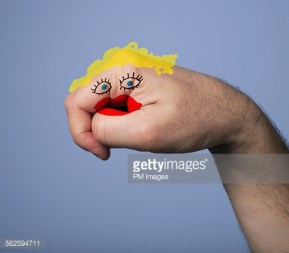
Here’s something we learned on day one: Make a fist with your fingers tucked over your 562594711thumb.   Turn the fist so you are looking at the thumb side. Et voilà: brain schematic! Your wrist is your brain stem, your thumb is your limbic system (which supports, among other things, emotions, behavior and motivation), and the rest of your hand comprises the cortex. Your fingers make up your pre-frontal cortex, which moderates decision making and controls social behavior.   Now “flip your lid” – quickly straighten out your folded fingers, exposing your thumb. Look who’s in control now? The pre-frontal cortex has left the building, and the limbic system is running the show. I love that. This is brain science I can USE.

Our first assignment was to join the class FB group and introduce ourselves with a few words about why we are taking the course. Here’s what I wrote: 1. I love to learn. 2. I’m fascinated by what I’ll call whole-life-ecosystem wellness: body, mind, spirit, work, family, community, environment, and 3. I’ve recently been mulling whether I should start a life-balancing/spiritual direction coaching practice, and I believe grounding in brain science will be extremely useful. Say the word “spiritual” and some people think “woo-woo!”: scéance time!  Or it conjures science-denying-religious-zealot-ideologues with a crazed gleam in their eyes and a hand on the tiller of the US congress. I’m particularly fascinated by learning about the brain as it relates to our existential/spiritual leanings, and also our creative imaginations.

The other students are from all over the world, nurses, teachers, healthcare practitioners, executives. There’s another Nia teacher, Ulrika Bergstrom from Stockholm (hi, Ulrika, if you’re reading! So nice to meet you.) I’m excited to participate in this new virtual community of learners. I guess it doesn’t really matter whether it all comes down to synapses and chemistry, or a web of spirit. It’s all cool.

Day Twenty-Two: I Sing the Body Electric

bosI’ve been singing with a women’s a capella group, “BroadBand” for the last fifteen years, and tonight is our annual pilgrimage to perform the national anthem at the Boston Garden. This is our fifth time there, and I’ve come to feel pretty casual about the gig. John asked me this morning who the Celts are playing and I had no idea. I told Mia I’d be home around nine tonight and she asked where I’d be until then.

“We’re doing the Celtics game again tonight, didn’t I mention it?” I said.

“Oh, that! LOL, just singin’ the national anthem for the Celtics, no biggie,” she said.

Here are some fun, behind-the-scenes facts from the gig:

We go out on the court during warm ups to do a sound check.   We are 16 women, decked out in black pants, white tops, kelly green accessories, very suburban-professional in style.   Players are running drills, shooting and passing, as we thread our way to center court to find our mark for the live performance. One year, Paul Pierce was on his back on the court floor getting his hamstrings stretched out by a trainer. He is 6’7” tall, and I think his outstretched leg reached chin level for most of us. We had to step over him to get to the mic stand. That was the year we learned that skirts are not the best choice for this gig.

The backstage area is cavernous; essentially, it’s the basement footprint for the entire arena and stands above. Two or three ambulances and the visiting team’s bus are parked off in one corner, and a couple of green rooms are set aside by black curtains hung from tall scaffolding. There’s a lot of waiting around backstage with the other performers for the night’s game. More often than not, we’ve shared a green room with a youth hip hop team or a girls’ cheerleading squad, 30+ wired kids with matching jackets and gear bags, eagerly doing their stretches under the watchful eyes of whistle-clad chaperones.   There is always an honorary color guard there to carry in the flags, usually composed of national reservists, I think. One year, a fellow Broad’s friend came along to hang out with us backstage, and he asked to check out one of the reservist’s rifles. Someone took a picture of it. Another time, Nate came backstage — he was a senior at Dartmouth and happened to be in Boston doing research. The Boston Celtics Dancers were practicing tumbling tricks out in the vast open space near the entrance to the court, and he went over and chatted them up. He got his picture taken with them, and one of them remarked flirtatiously that he reminded her of her best friend’s boyfriend. The women tumblers are astonishingly petite in person, resembling jacked-up fourth graders. It’s breathtaking, and a little stomach churning, to watch them practice somersaulting up onto the shoulders of the guys, eight feet above a concrete floor. That year, Nate finagled us into two seats on the floor, where we sat directly behind Boston Red Sox player and newly crowned World Series champ Mike Napoli. The photo I took of the two of them together was Nate’s profile picture for a couple of years.

The first time we sang at the Garden, I could barely control my voice I was so nervous and excited. Singing while nervous is a challenge, because your body is your instrument, and most vocal technique requires subtle and very specific mechanics. On a good day, it can be hard to get it right – to form vowels correctly, to “place” the sound so that it resonates fully, to raise your palate, relax your tongue, and fully support your voice with your breath. When I’m nervous, though, these finer mechanics go out the window, and it’s all about the breath. When your heart is hammering in your chest and your mind is freaking out about the high C that you only hit in about half of rehearsals (and that, after a relaxing glass of wine with your friends)—well, it’s hard to breathe.

For our first appearance at the Garden, my breath came like a baby rabbit’s: shallow, fast, terrified. We are supposed to smile and look up at the stands. One of our husbands took some photos, and many of us, myself included, look wide-eyed and stricken.   It was an out-of-body experience, plain and simple. “Out-of-body” is not a very comfortable place to be.

The incredible thing about performing the national anthem in a major venue like the Garden though, is the energy you get from the fans. They start cheering right around “banner yet wave,” which in our arrangement is a beautiful, rich chord: harmonic hollandaise that the fans don’t even get to taste because they’re whistling and carrying on. You’re not exactly sure whether they are cheering for you, or because you’re almost done and the game is about to start, but that quickly becomes immaterial. By the time we’re hitting “home of the brave” we can’t even hear ourselves sing because 15,000 fans are hollering and clapping, blowing airhorns and drumming the seatbacks.   The first time it happened, I was surprised to be overcome with emotion.   Now, we’ve come to expect it, and we start grinning as we begin the run up to the final verse.

People always congratulate us as we leave the court. Once or twice, a player has given us the thumbs-up; the courtside security guard tells us it’s the “best one this season”; kids snap our picture on their cellphones; season ticket holders call out stuff like “bee-yoo-tee-full!” and “good job, girls.” It’s a high to feel yourself borne up by the goodwill of 15,000 human souls in community: truly, a body electric.   Certainly, there’s a sentimental patriotism that gets me choked up. But I am even more moved by the palpable vibe that resonates when people come together and share their positive energy, even if only for that one chord before the game begins, and they start chewing out the ref and booing the visiting team, Bahston-style.

I’ll let you know if I manage to hit the high C.

Day Twenty-One: Overheard

I gave myself a prompt for today’s post: write a piece that uses other people’s words, whether things they said to me directly or things I overheard in passing. I don’t know quite where this will take us thematically, but here they are, a selection of the voices I heard today, in their own words:

JANIE: Nia student, 8:50 a.m. (to me): Omigod, what comes out your mouth is what’s in my head. It’s almost scary. But cool.

TWO 40-SOMETHING WHOLE FOODS WORKERS: Unpacking bulk nuts in front of the bulk foods bins, 10:00 a.m. (overheard): You have to grant that! He inherited the cost of two wars that Dubya started and didn’t even begin to think about paying for. He bailed out the banking system to stave off a depression. You can’t tell me that’s not true. I don’t care what those Republican assholes say. Those are deluxe mixed nuts.

(Note: it’s all downhill after that one.)

these boots were made for slogginTWO MOMS: Loading their dogs back in the car after walking at Cat Rock conservation trails in Weston, MA. Both women were caked in mud up to the knees, 11:15 a.m. (overheard): Well, that was the dogs taking the owners for a walk.

DOGWALKER ON THE SAME TRAILS: After yelling at Westley for running up to greet the five dogs she was leash training, 11:45 a.m. (to me):  I really worry about the pack mentality with these guys on the leash. It can get ugly fast.

LADY WITH A PINK UMBRELLA ON THE SAME TRAILS: Her white poodle covered in mud, 11:50 a.m. (overheard): Well, aren’t we having a lovely slog, Muffin?

TWO GUYS: In the mall, 1:00 p.m. (overheard): Who knows their neck size anyway?  What is that, even?

DISPIRITED SALESLADY: Visionworks Store, after giving me an estimate of $600 dollars for new glasses, 1:15 p.m. (to me): Well, of course, Costco is far cheaper, and the quality is really just about the same.

NICE SALES GUY: Costco Vision Center, 1:45 p.m.(to me): You’d be amazed by how many people lose their prescription glasses. One guy lost them in the store the day he picked them up. You shouldn’t feel bad about that at all.

OTHER SHOPPER IN THE COSTCO VISION CENTER: 1:50 p.m. (to me): I like the red ones on you. Not everyone can pull those off.

JAMIE: On the speaker phone from her kitchen, 4:15 p.m. (to me): The word “incubator” so resonates for me. It says growth and movement, development. I really like it.

MIA:  From the second floor.  I am downstairs writing in the kitchen, 4:47 p.m. (to me):  MOOOOOOOOOM?!  

JOHN: Checking in by cell, 5:00 p.m. (to me): Well, the doctor pounded up and down my spine. He said if it was a bad fracture I’d be in a whole lot more pain, so that’s good news.

Perhaps the best exchange I had today was silent. There wasn’t much parking at the mall (this always amazes me, by the way, our American ability to consume. But hey, I was there, too.)  Cars were prowling up and down the aisles like cats waiting for their prey to make the first move. Another car and I arrived at an open space at exactly the same moment, traveling from different directions. I even think he might have been there first. He made a gallant gesture, as if he were doffing his hat. I couldn’t quite tell if he was mouthing the words “All yours” or “Up Yours.” Either way, he was smiling.

Day Twenty: Try a Little Tenderness

pace-osu-craft-cideryOk, as Super Tuesday looms, I’m gonna take another stab at the body politic thing. But it’s going to take me some time to wade through the complexity of my own responses to the wild ride that is the 2016 race to the nomination. So stay tuned. Aren’t I becoming a savvy self-marketer?

Speaking of which, I’ve heard that the way to really make your blog catch on is by endorsing stuff. If you’ve been reading along, even just casually, my guess is you know that I endorse the following: dance regularly (even if it’s just to Motown in your kitchen), befriend your body, be on the lookout for serendipity in the smallest things, be there for those you love, and be compassionate towards everybody, especially people you find yourself recoiling from. (More about that in the upcoming body politic post which—TEASER—will endorse a candidate. So stick around…) Other things I endorse: a well-timed, well-placed F-bomb, a muscular sense of humor, the examined life, and dogs. Granted, these are not the kind of endorsements that are going to land me a fat advertising contract. What I don’t endorse, although I admit I am as susceptible to its sway as an insomniac QVC viewer with a closet full of chachkis: stuff.

I will, though, turn you on to a great, young recording artist I’ve come across. Her name is 0602517564510Lizz Wright, and the album you need to download is called “The Orchard.” Her cover of Carole King’s classic “I Feel the Earth Move” is falling-off-the-bone tender. She also covers Led Zepplin’s “Thank You,” her earthy, rich alto giving the song a surprisingly gentle-yet-forceful passion. This album makes me want to make loooove. And I’m post-menopausal and have zero hormones. So that’s saying something.

I first heard about Lizz Wright from a friend, and then my friend Maria Skinner choreographed a gobsmackingly beautiful Nia class to “The Orchard,” movements as meltingly delicious as the music itself. A bunch of teacher colleagues all clamored to learn it.

I’ve been working with it off and on for a while now, including this morning. It’s my eighth day in a row teaching a class (usually I have at least one day off), and this morning my body felt tight and fatigued. My Tuesday morning class has never really packed ‘em in for some reason, and I found myself thinking it would be okay, just this once, if nobody showed up and I could take the morning to rest.

As luck would have it, though, I did have one student. I’ll call her Stella, although that’s not her true name, but she shines in a very particular way, so I think it suits her. Stella has a cognitive impairment. I don’t know the precise nature of her disability. She’s maybe in her fifties, like me, but she is quite childlike in some ways and almost elderly in others. She processes language in fits and spurts, and her speech is slurry. When she’s talking to you, she has a myopic way of looking just over your shoulder from behind her smudged eyeglasses. She comes to almost every class the studio offers. We have a “no shoes inside the space” policy to keep the grit of the New England winters outside, and we all leave our boots in the hallway and come into the studio waiting area barefoot. But Stella always changes from her boots into slippers covered in gold sequins. I call them her sparkle shoes, which makes her laugh.

One thing I’ve noticed about Stella in some of the more energetic Nia classes I teach is that she is concentrating very hard on making her feet do the steps. Her movements are awkward and stuttering. But she is beautifully present. She hums along with the music, which being a singer, I love to see, even though her voice isn’t musical, strictly speaking. What I most love about Stella when she dances is how she moves her hands, with incredible delicacy.

Because it was just the two of us, and it seemed to fit each of our needs, I switched the play list I’d been planning to teach—a high-energy, complicated hip-hoppy sort of an affair—for “The Orchard.” Our focus was moving gently and slowly. I spoke very little. I sense that processing language while moving isn’t pleasurable to her the way it may be for other students. Self-editing (in teaching, writing and life in general) is an “improvement area” for me, so today, Stella was my teacher. She helped me lean into the silence. It seemed right for the two of us to take it slow this morning, like an apple ripening in the sun.