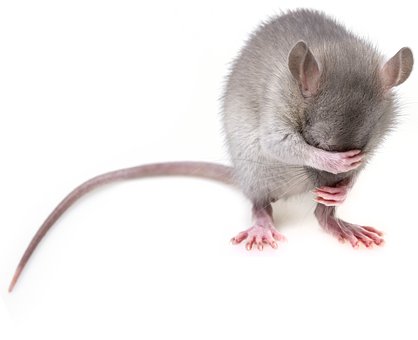
 We would not be conversing at all today, dear readers, were it not for the humble wireless mouse. The trackpad on my Mac laptop suffered an inexplicable and sudden nervous breakdown yesterday afternoon, whether through a software conflict (I had just cried “Uncle!” in the face of OS High Sierra’s incessant reminders that I install updates) or hardware exhaustion (my MacBook pro is six years old and well-loved), I cannot say. But the curser decided either to skitter around my desktop willy-nilly, like kids playing tag, or to disappear from the desktop entirely. Either way, the trackpad flatly refused to respond.
You know what this means, right? A trip down the black hole of tech support. Online chats and discussion forums directed me to restart in safe boot, in recovery mode, to reset something called PRAM, which has nothing to do with British babies. All to no avail. Aubrianna was the name of the virtual assistant who chatted with me online late last night, coaching me through an SMC reset. This achieved precisely nothing. She said she wouldn’t leave me without making sure her proposed solution worked for me, but the girl was COLD. She was on to the next complainant before the beachball even began spinning on my desktop. My Apple case number lead only to an error message. It used to be a matter of a click or two to book an appointment at the nearby Genius bar, but now you have to claw through about seven screens to get to the list of available times. It’s like the obstacle course at bootcamp; one false move and you’re off the wall and down in the mud. The earliest appointment I could find is Thursday at 5:00 p.m., which when you are a writer, designer and web solutions consultant, is basically as a good as “never.”
Thankfully, for just $12.99 and a ten-minute drive to my local Staples, I was able to pick up this adorable little pink wireless mouse gizmo. It’s been years since I’ve used a mouse. We have a picture of Mia at age three sitting by the old desktop tower, holding the cabled mouse up to her ear as if it were a phone. That mouse was replaced by a snappy-looking red wireless version, but this was years ago, and with all our de-cluttering over the past few days, we couldn’t find it anywhere. Reacquainting myself with mouse technique was a little irritating at first. I kept swiping two fingers around the trackpad, looking in vain for the cursor, or wondering why the screen wouldn’t scroll. But it’s like riding a bike, the muscle memory comes right back. Using a mouse is like driving a little sports car. No more slouching in overstuffed, upholstered chairs while I write, or fanning myself outside on the patio. Until I meet my Genius, I am writing properly, at the kitchen desk, back straight and feet on the floor. It feels very businesslike. I like it.
Everything old is new again.
Gratitude #23
 Ok, so I don’t actually believe that my life will change just because yesterday John and I KonMaried all the books in the house, packing 14 boxes of tomes that once captivated us, but through the years have lost their luster in our hearts. Using the Japanese de-cluttering principles set forth in Marie Kondo’s book “The Life-Changing Magic of Tidying Up,” we went room by room through all the bookshelves (and stacks, piles, bins, and baskets–also a few boxes of books we had previously packed to give away, but forgot to drop off at the library book sale.) We held each book in our hands and tried to observe whether it brought us a sensation of joy. The results surprised me, in some cases: all the Irish poetry collections from my year at Trinity College in Dublin, Patrick Kavanaugh and Seamus Heaney, those loamy, boozy, sainted laureates: gone, without a backward glance. Yeats’ poetry stayed, but his dramas, which were the subject of my senior thesis? Slán leat, which is gaelic for goodbye. Billy Collins, Adrienne Rich, Mary Oliver and Rilke got to stay, but poor Wallace Stevens got thrown in the give-away box in duplicate, once by me from the poetry section in the bookcase next to the bed, and once by John, who had a different edition on his bedside table. I may never again read To Kill A Mockingbird, A Visit from the Goon Squad, Extremely Loud and Incredibly Close, Beloved, but they made the cut without a second thought. Among my books about writing, I kept Annie Lamott’s Bird by Bird, Robert McKee’s Story, Elizabeth Berg’s Escaping into the Open and Natalie Goldberg’s Writing Down the Bones — I stole some of Goldberg’s prompts when I taught high school essay writing; I still use Berg’s thought-starters when I’m stuck. I couldn’t do without Elizabeth Gilbert’s wonderful Big Magic, about the divinity that feeds all creative endeavors, but easily parted ways with her novels and the memoir Eat, Pray, Love, even though I loved it when I read it. I’ll admit that I gave away Anna Karenina, but kept every single volume of Harry Potter.
 It’s a rainy morning, affording the luxury of a guilt-free deep dive into the pages of the Sunday New York Times, something I eschew in favor of the word puzzles when I have limited time —“Spelling Bee” has become a particular obsession since Nate and Annie introduced me to it two years ago. This morning, an article caught my eye:
  I am literally a tree-hugger. My childhood home on the Gold Coast of Long Island was landscaped with beautiful old maples, birch trees and an apple orchard. Our property abutted an undeveloped tract of land that was wooded and cool, with a small grove of white pines that as a very little girl I would skip off to visit, back in the days when a mom would simply open the screen door and gesture outside: Be home in time for lunch. Early one spring morning, one of those late-May days when the buds uncoil and the air buzzes with energy—bugs and birds awakening, plant life percolating– I went out to the grove to visit my favorite pine tree, one with a thick trunk and low hanging branches drooping down to touch the earth. The air was cool and piney in my tree-tent, and the tall tree stood silent and calm. I was so bursting with love for it, I took off all my clothes and hugged the trunk, loving the feel of the soft pine needles under my feet, the spring breeze on my skin, the touch of the scratchy bark in my arms. I must have been four or five. I never told a soul (not from shame, but reverence), although the experience showed up in the draft of young adult novel languishing in my drawer of unfinished projects, so it’s stuck with me.

 I remember my first-ever grilling season. It was my freshman year at Princeton, and the food services union went on strike. My roommate Margie and I lived in a first-floor dorm room, with lovely, Gothic leaded-casement windows opening on to one of the quads that make Princeton so picturesque. Margie’s mom and dad drove a little Hibachi charcoal grill up to campus, and we plopped it on the ground outside our window. We kept the charcoal, lighter fluid and matches in our room, and most evenings, we’d have an impromptu cookout. You’d probably get expelled for less now. But it sure was a great way to meet people. We would lean out the window and drop a burger on the grill, chatting with whoever was drawn across the quad by the siren song of sizzling ground beef. Most of our classmates were surviving on Lucky Charms, Pop tarts and take-out pizza.
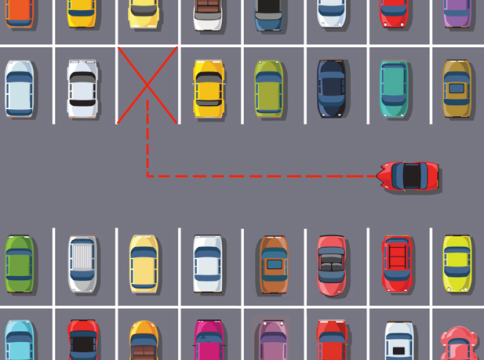 We joke in our family about “parking karma,” specifically my mother’s supernatural knack for pulling into a newly vacated space right near the entrance to the store, or doctor’s office, or mall. Other drivers will have trolled the aisles for ages waiting for something to open up, but Mom will be the one to come along just as a car pulls out. It’s become our shorthand for cosmic generosity, an almost-superpower of ease—sometimes earned, but often just kismet– in a specific corner of one’s life. Mia, for example, has great waitlist karma. She doesn’t always get what she’s going for on the first pass: a fellowship, a class she wants to take that’s closed, admission to a program, or college. But she has been waitlisted a few times, and then effortlessly prevails. Lucy seems to have good job-finding karma, which is a pretty sweet gift from the universe. Although this could simply be that she’s crazy competent and talented and people recognize that about her. Either way, she’s about to move to Los Angeles to pursue her fortune as a costume designer, so I’m grateful for it.
 John is taking a six-week sabbatical before beginning a new job in September, and one of the ideas we briefly bandied about is a device-fast. In particular, I’d love to stiff-arm the daily sturm und drang of the twenty-four hour news cycle. I’m pondering whether I can step away from my laptop, since I rely on it heavily for work. It would be interesting to try writing longhand and see how the physicality affects my process, and maybe also the content. But the web design work I do is predominantly digital in nature. Curating images, for example, requires a lot of internet research. So I’ll see how it goes. The intent would not be to put our heads in the sand. But always having our eyes screen-locked is a different form of doing just that: immersing ourselves in an alternate reality that denies the pulsing life and connections all around us.
 I woke up in a good mood this morning. And I went to bed in a good mood last night, in large part because I have a love affair with our bed. Some of my affection has to do with the setting. Our bedroom is on the third floor of the house. It used to be the attic. Orange shag carpet ran up the stairs, the paneled walls and the gable ceilings, overstock put to work by the previous owner from his day job as a salesman at Carpet Carousel. When we had kittens, they liked to climb the walls up there. But when we decided we wanted to have another baby, our third, it meant reclaiming the attic for a master bedroom. We jacked up the roof, slicing it off the ninety-year-old house like the top layer of a cake, the joists groaning and the walls undulating as nine decades of torque unspooled. The raised roof was high enough for an eight-foot-tall Palladian window at one end of the room. From our bed, we look out through the treetops; the room takes on seasonal hues of yellow in fall, green in spring or summer, gray-blue in winter.
 I love words. Finding the right one, precise, honed like a scalpel to slice sharply into the flesh of a sentence, gives me visceral pleasure. I abhor lazy diction, especially in prose.
 A Body Story